3.1. Instrument Mounting and Radar Beam Size#
Instrument Mounting#
Proper site selection and correct installation are essential to achieve the specified measurement accuracy.
The tilt angle relative to the horizontal plane should be between 45° and 65°. Tilt angle of 60° is recommended for optimal performance. If the instrument is properly mounted to a vertical pole or structure, tilt angle can be achieved with standard installation tolerances of ±5°.
For best results, the instrument should be aligned parallel to the direction of water flow. Any deviation from the flow direction will reduce the measured velocity value. The measured value will always be lower than the actual surface velocity if the instrument is not properly aligned. It is recommended to point the instrument upstream, so the water flows toward the sensor.
Radar Beam Width#
The installation height and tilt angle determine the size and position of the radar measurement area on the water surface. The radar beam covers an elliptical area on the water surface, and the instrument reports the average surface velocity within this area.
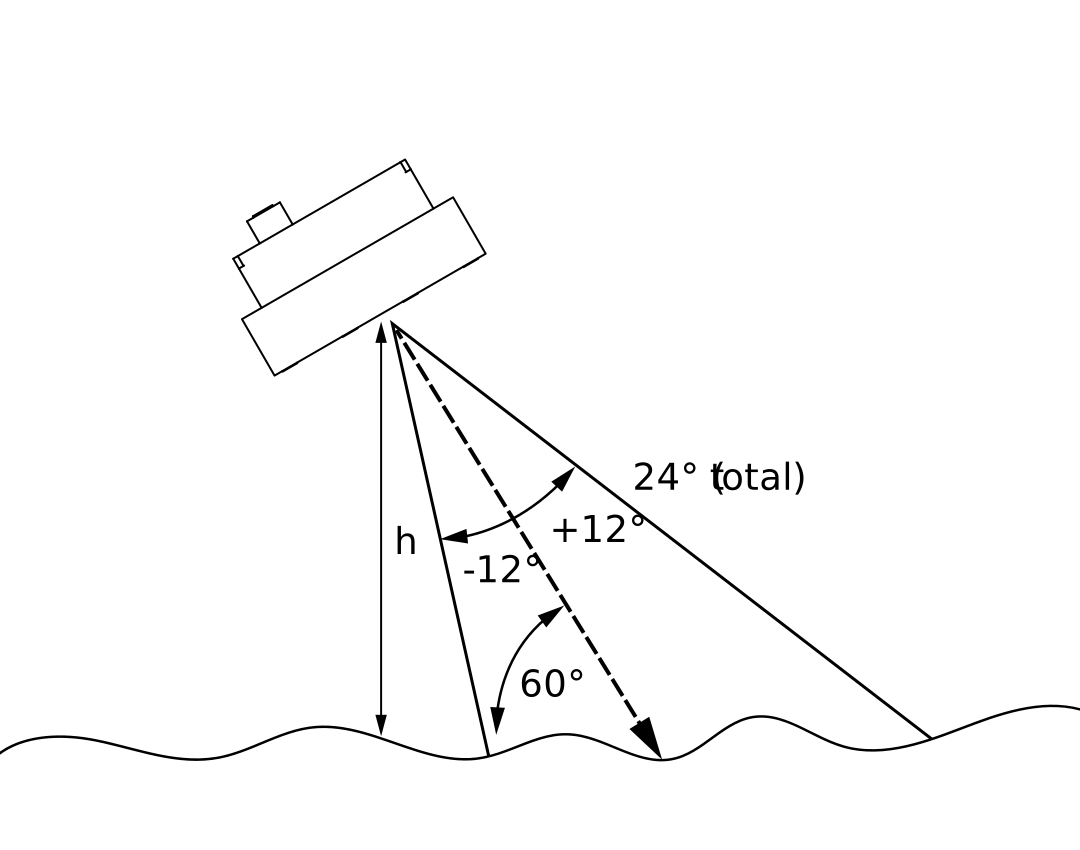
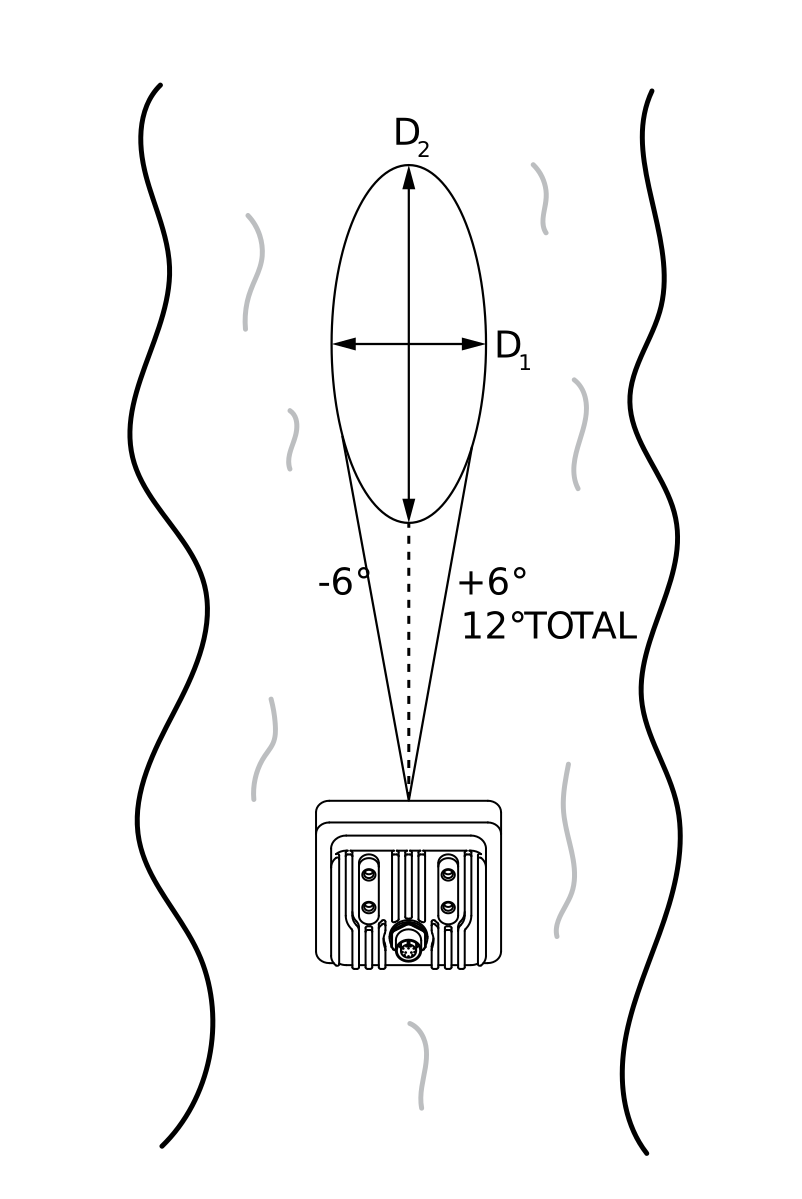
The dimensions of the ellipse depend on the installation height of the instrument above the water surface. The formulas used to calculate the ellipse diameters, as well as a table showing the diameters for different installation heights, are provided below.
Height (m) |
D1 (m) |
D2 (m) |
|---|---|---|
1 |
0.24 |
0.58 |
2 |
0.48 |
1.15 |
5 |
1.21 |
2.88 |
10 |
2.43 |
5.75 |
20 |
4.85 |
11.51 |
30 |
7.28 |
17.26 |
Height (ft) |
D1 (ft) |
D2 (ft) |
|---|---|---|
5 |
1.21 |
2.88 |
10 |
2.43 |
5.75 |
20 |
4.85 |
11.51 |
30 |
7.28 |
17.26 |
60 |
14.56 |
34.53 |
90 |
21.84 |
51.80 |
Controlling Radar Beam#
Unlike traditional Doppler-based radars, the VX60 uses frequency-modulated technology that enables advanced control of the effective measurement area on the water surface.
The previous section describes the maximum radar beam footprint, which is defined by the antenna geometry and installation conditions. However, the VX60 does not need to use the entire footprint. Through modulation control and signal processing, the instrument can limit measurements to a selected portion of that area. This allows the user to focus on the most representative flow conditions and avoid disturbed or non-uniform regions.
Beam Control Parameters#
The VX60 provides two configurable parameters for adjusting the measurement area:
1. Beam Width
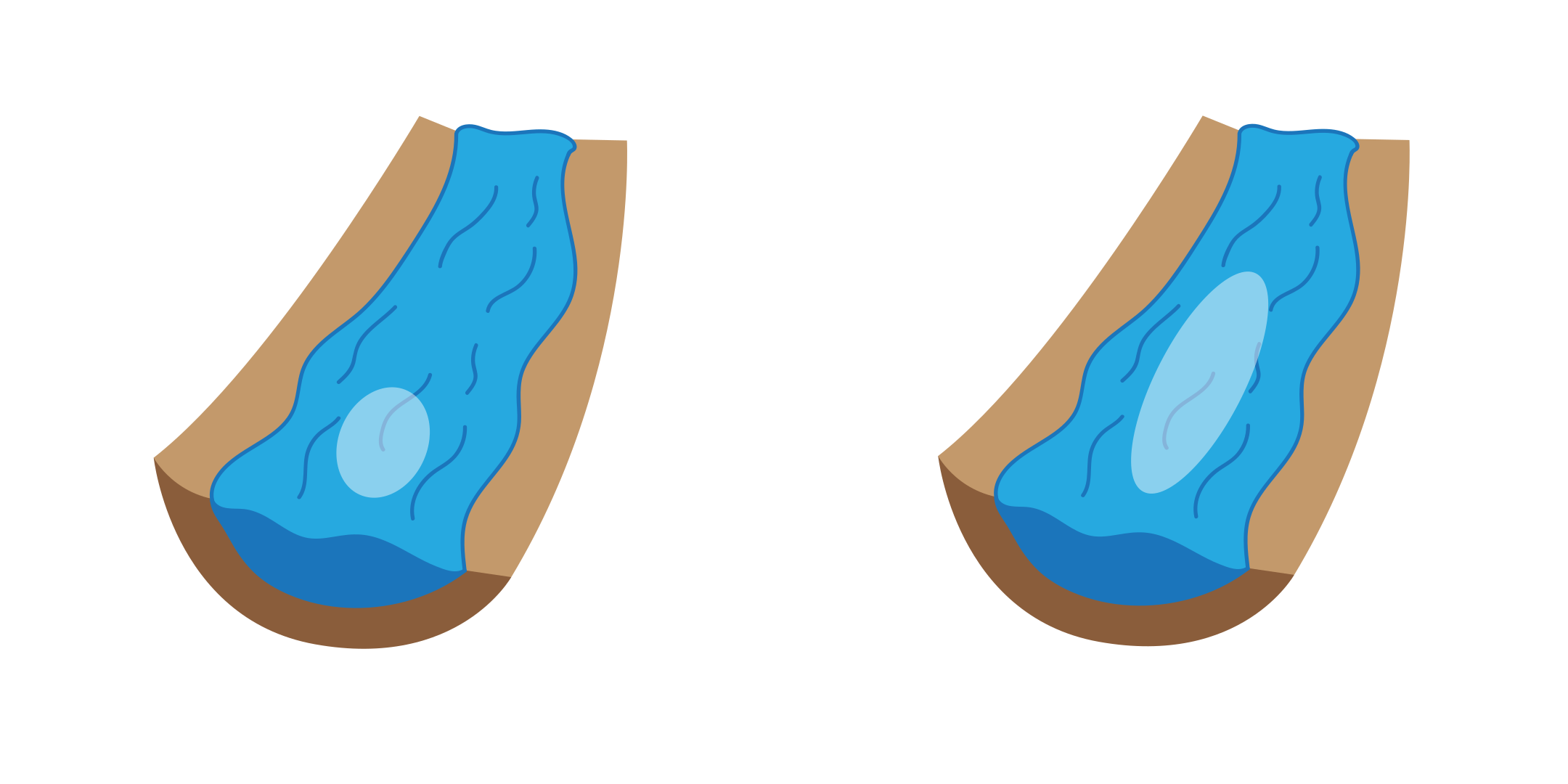
This parameter controls the size of the measurement area in the elevation direction (i.e., effectively reduces the D2 diameter of the ellipse).
Available options:
Narrow – restricts measurements to a smaller, more focused region; recommended when flow disturbances are present and a more stable region must be isolated
Wide – uses a larger portion of the radar beam; suitable for uniform flow conditions
2. Beam Offset
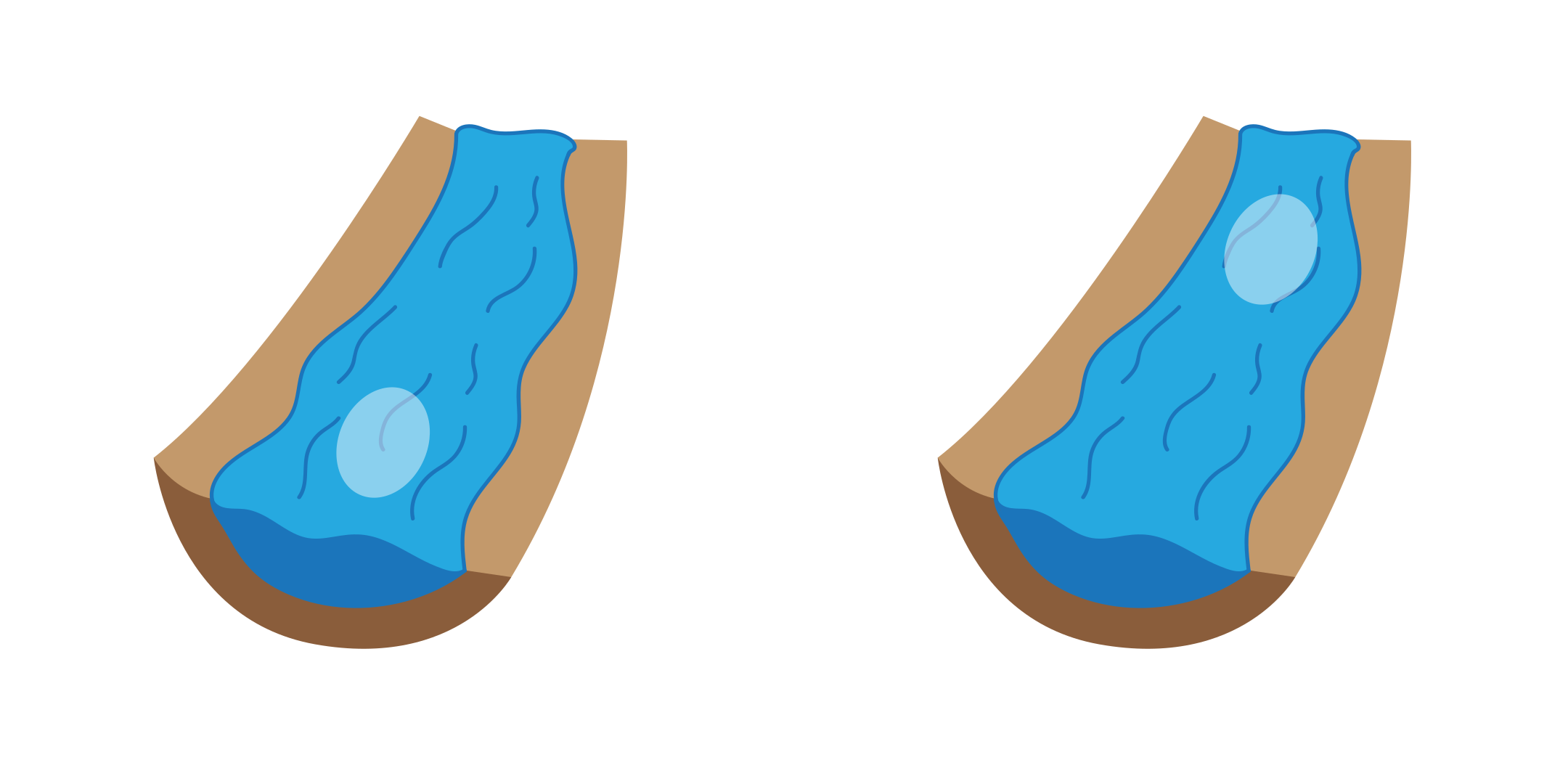
This parameter defines the position of the measurement area within the overall radar footprint. It allows the user to shift the active measurement zone along the flow direction.
Available options:
Near – measurement area is closer to the sensor
Far – measurement area is further away from the sensor
Radar Beam Configuration Matrix#
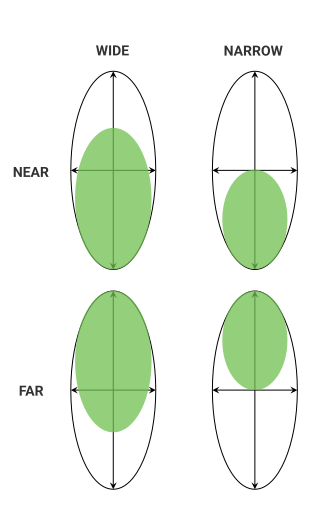
Effect of beam parameters on active scanning area.#
Correctly Adjusting Beam Width and Position#
In real-world installations, flow conditions are often non-uniform. Turbulence, obstacles, or channel geometry can create areas where velocity measurements are not representative of the average surface flow. By combining Beam Width and Beam Offset, the VX60 allows the user to target the most stable portion of the flow.
Example 1 – Upstream cascade or turbulence away from the sensorDisturbance located further from the mounting point.Recommended settings:- Beam Width: Narrow- Beam Offset: Near
—
Example 2 – Turbulence near a bridge pier or mounting structureDisturbance located close to the sensor.Recommended settings:- Beam Width: Narrow- Beam Offset: Far
—
Example 3 – No disturbace or turbulenceThe water flow is uniform.Recommended settings:- Beam Width: Wide- Beam Offset: Near